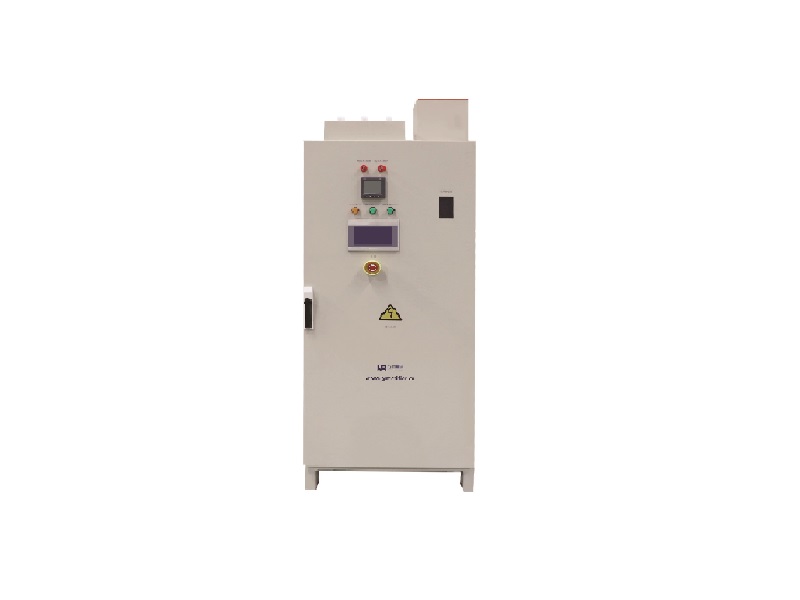
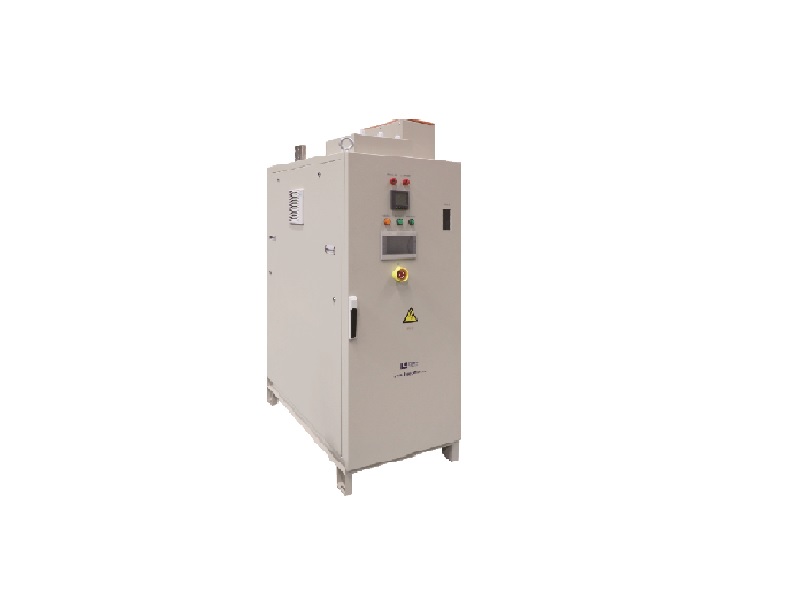
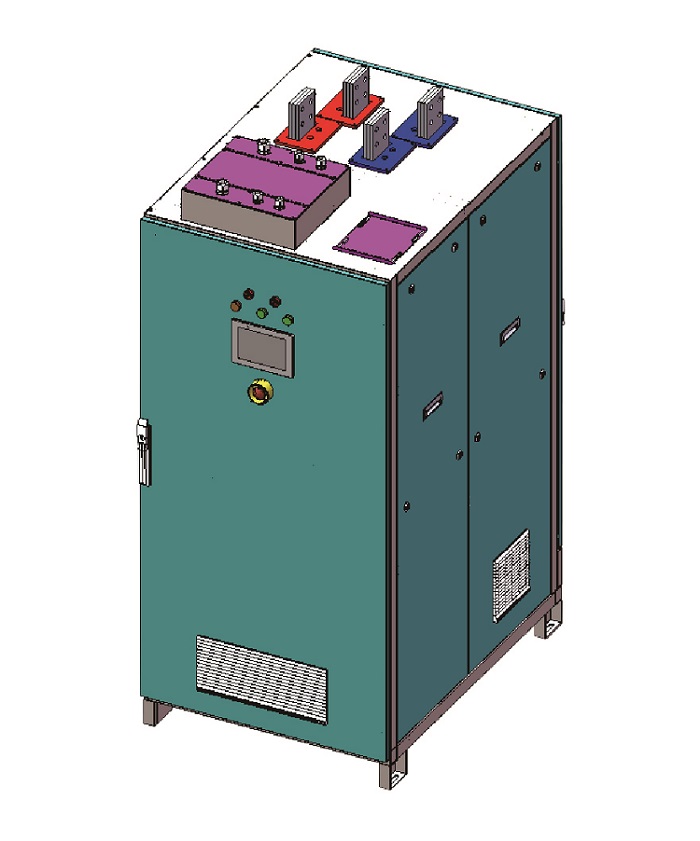
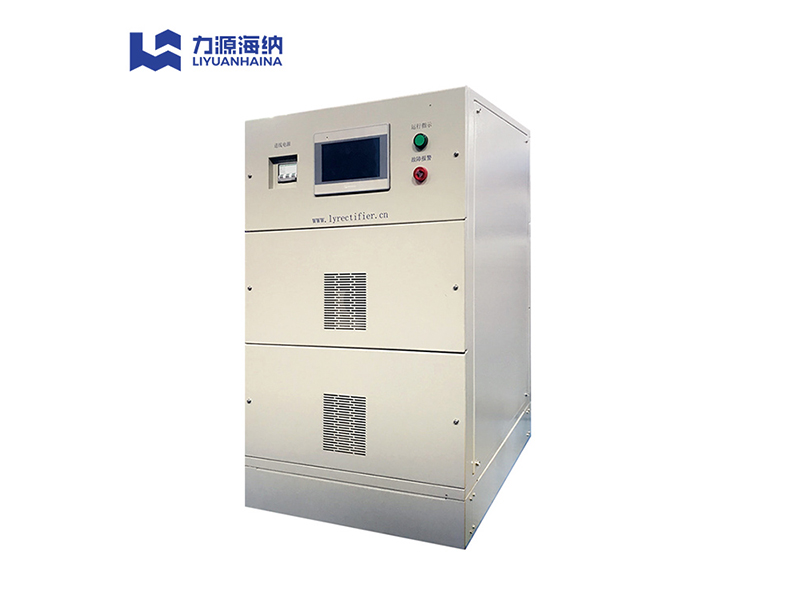
Power Supply Type: IGBT-based High-frequency Power Supply
Application Industries: Power supply for MS monocrystalline silicon Czochralski (CZ) furnace heating. This power supply is essential in the manufacturing of integrated circuits, solar cells, LED chips, semiconductor lasers, sensors, and other semiconductor-related applications.
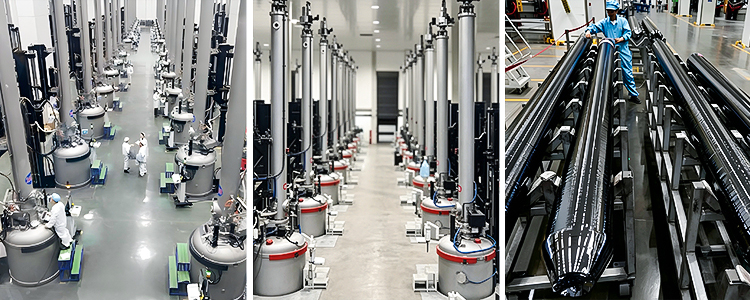
Monocrystalline silicon stands as one of the most widely used materials in the modern electronics industry. It finds extensive applications in the production of computer chips, solar cells, LED lamps, semiconductor lasers, sensors and other sectors. Manufactured from high purity monocrystalline silicon ingots, monocrystalline silicon photovoltaic modules deliver relatively high photoelectric conversion efficiency and outperform comparable products under low light conditions.
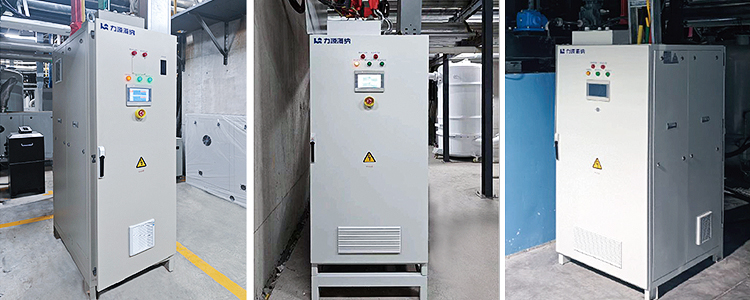
The monocrystalline silicon heating power supply serves as the core power conversion and temperature control unit for Czochralski (CZ) monocrystalline silicon pullers. It exerts a direct bearing on the crystal quality and yield of semiconductor and photovoltaic grade monocrystalline silicon. This type of heating power supply sees broad deployment in semiconductor manufacturing, the photovoltaic industry, as well as materials science research.
Working Principle
The single crystal silicon heating power supply operates primarily on the principle of heat generation when electric current passes through a conductor. Its basic configuration includes a power control system, heating elements, and temperature sensors. In this monocrystalline silicon heating rectifier, the control system is responsible for voltage and current regulation—keeping the heating elements stable. The heating elements? High-temperature alloys. They're built for extreme heat. Temperature sensors are placed in the loop. They collect thermal data during operation and send it back. With this feedback, the control system holds the temperature. Precision is critical here—it directly affects crystal growth.
Applications
Single crystal silicon heating power supplies are widely used in the following fields. The monocrystalline silicon heating rectifier is a key component in each of these applications: › Single crystal silicon growth: Czochralski (CZ) or float-zone methods, with the heating power supply providing the high-temperature growth environment. › Post-treatment processes: Annealing and other processes to improve crystal structure. › Semiconductor manufacturing: Pulling high-purity semiconductor-grade single crystal silicon ingots, requiring extremely high temperature stability from the heating power supply. › Photovoltaic industry: Large-scale production of solar-grade single crystal silicon, where the heating power supply helps reduce energy consumption and improve ingot pulling yield rates. › Laboratory research: Materials science research, development and performance testing of new silicon materials.
Product Features and Technical Characteristics
› Efficiency and Power Offers both conventional and high-efficiency modes: · Conventional mode: IGBT + fast-recovery diode, efficiency ≥ 95%, with over 20 years of manufacturing experience. · High-efficiency mode: Industry-first SiC + synchronous rectification, efficiency ≥ 97%. · Rated rectification efficiency reaches 97%.The monocrystalline silicon heating rectifier also delivers a power factor ≥0.95 and excellent stability.
· The integrated DC bus architecture significantly cuts energy consumption while maintaining ultra-stable DC output. · Oversized design philosophy: Rectifiers and transformers are selected with capacity exceeding standard ratings to support 24/7 continuous operation.
› Control and Precision · Multiple control modes: constant voltage, constant current, and constant power. · High control precision with convenient power calibration; power accuracy error < ±0.01kW, stability accuracy ±0.1kW. · Current ripple coefficient ≤ 1%. · Digital control architecture for high reliability. · Fast control response, excellent dynamic characteristics, and superior current sharing consistency (current sharing error < 1%). · Local centralized control via color touchscreen, with remote analog interfaces (0-10V, 4-20mA), RS485, and Ethernet communication. · Digital networked intelligent control: no signal attenuation in control transmission, with an intuitive human-machine interface. · Main control system utilizes proprietary multi-loop control technology for robust stability. · FPGA digital + analog hybrid control ensures fast response and excellent dynamic performance. · High-precision low-drift sampling components guarantee high output accuracy.
› Structure and Reliability · Fully sealed isolation design: Full-water-circuit architecture with no water pipe joints inside individual units, eliminating leakage risks. · Modular design: Parallel modular configuration with N+1 redundancy. Each module is compact, lightweight, and easy to install or remove. Any module can be switched on or off while the power cabinet automatically rebalances current sharing without affecting normal production. · Patented unit module structure: No water pipe joints to prevent leakage. · Industrial-grade anti-leak locking nozzles and imported flexible hoses: Effectively prevent delamination, cracking, seepage, and loosening issues caused by prolonged use. · Three-proof technology: Anti-acid, anti-corrosion treatment and electrostatic powder coating. All sub-units feature fully sealed construction, strictly isolated from the operating environment, providing excellent moisture, dust, and corrosion protection. · Anti-salt-mist and anti-acidification measures: Capable of resisting dust contamination in the field environment with high reliability. · High reliability: International first-tier brand components, derated to military standards in design, manufacturing processes, and aging testing. PCBs are effectively protected against salt spray, dust, moisture, and mildew. · Strong anti-interference capability: Control circuits are fully isolated from input and output power circuits. Comprehensive interface protection circuits are in place to accommodate harsh industrial environments with significant electromagnetic interference.
› Harmonic Mitigation · LYAPFC harmonic mitigation device (optional): Total current harmonic distortion < 5%, reducing harmonic interference from the switching power supply on the utility grid while also mitigating harmonic feedback to the grid, ensuring stable equipment operation. · 750V DC bus centralized power supply: The rectifier cabinet incorporates patented technology that enables online hot-swap replacement of rectifier silicon components without interrupting production. · "One-to-one" equivalent 24-pulse phase-shifting harmonic mitigation: The mitigation device contains no electronic circuitry, ensuring robust reliability, and is housed within the same enclosure as the power modules.
› Circuit Design · High-frequency switching power supply developed based on high-frequency inversion, phase-shifted full-bridge, and PWM control technology. · Internal high-frequency rectifier circuit with high inverter frequency and fast control speed. · EMI filter reactors are installed at the input of each unit for enhanced interference suppression. · Core components sourced from leading international brands. · Excellent output waveform quality.
› Protection Functions · Multiple alarm and protection systems: Overload alarm, soft-start protection, process fault detection, leakage protection, water shortage protection, overtemperature protection, emergency stop, etc. · Protection features: Overvoltage, overcurrent, undervoltage, short circuit, phase loss, overtemperature, and more. · The power cabinet reserves circuit breaker slots for the single crystal furnace control cabinet power supply, vacuum pump, simplified filter tank, and spare breakers, customizable based on site-specific requirements.
› Specifications and Cooling Available in multiple specifications and cooling options.
Technical Parameters
Parameter
Specification
AC Input Voltage
Three-phase,AC 380V ±10%, 50±1Hz
DC Output Voltage
DC 0–55V, 0–60V (customizable)
DC Output Current
Main: 0–3000A; Auxiliary: 0–2000A (customizable)
DC Output Combination Modes
(3+2), (3+3), (2+2+3), (3+3+2) (customizable)
Power Factor
≥0.95
Rated Conversion Efficiency
≤94% (TD Series)
Regulation Accuracy
±0.01kW
Current Ripple Coefficient
≤1%
Rectification Topology
TD Series: Fast-recovery diode rectification
Inverter Switching Mode
Full-bridge inverter
Switching Frequency
15–25kHz
Duty Mode
Continuous operation at full load
Load Class
Class II
Cooling Method
Water-cooled
Transformer Insulation Class
Class F
Protection Functions
Overvoltage, overcurrent, undervoltage, short circuit, phase loss, overtemperature, and more
Operating Temperature Range
-20°C to +45°C
Enclosure Protection Rating
IP54
Design Service Life
20 years
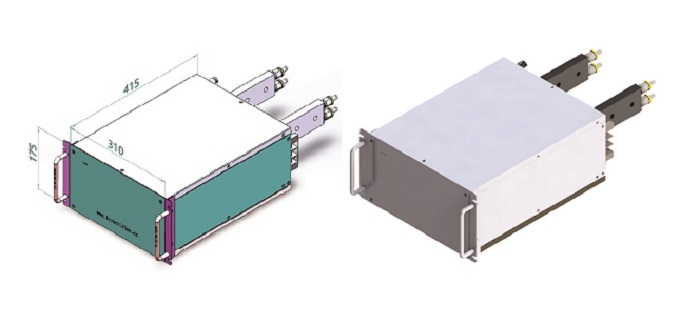
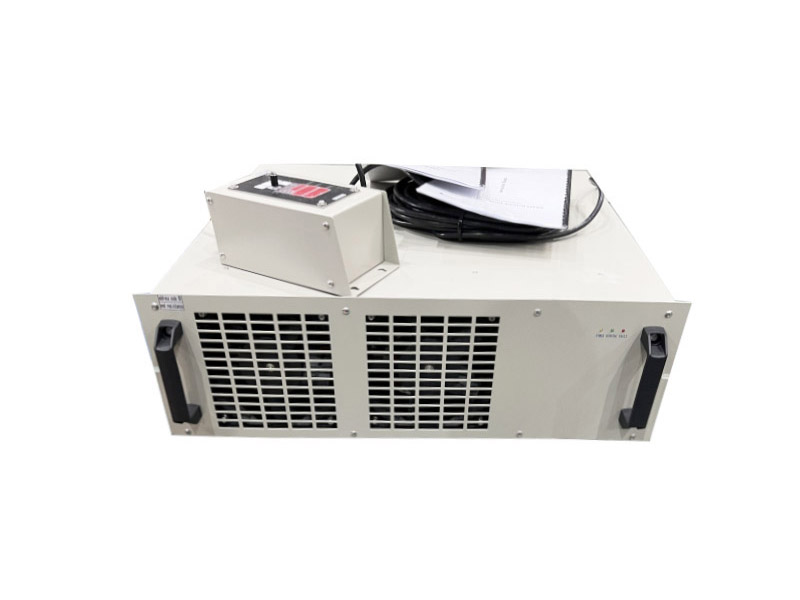
Module Dimensions (TB Series)
D 415mm × W 310mm × H 175mm
Module Weight (TB Series)
28.5kg
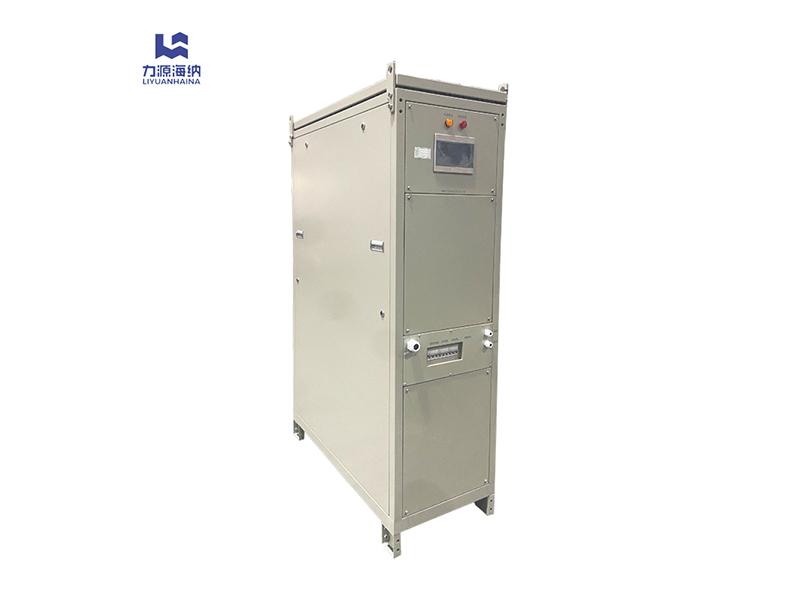
Overall Dimensions
Single Size
Selection Guide
Selection of a monocrystalline silicon heating rectifier involves several key factors: › Power requirements: Determine the required heating power based on production scale and process specifications, typically expressed in kilowatts (kW). › Temperature range: Different processes have different temperature requirements. Ensure the heating power supply can meet the required temperature range. › Control accuracy: Temperature control accuracy directly affects single crystal silicon quality. A heating power supply with a high-precision temperature control system should be selected. › Energy efficiency: High-efficiency monocrystalline silicon heating rectifiers cut production costs and reduce environmental impact. › Brand and after-sales service: Well-established brands offer reliable equipment with long service life, and solid after-sales support helps reduce long-term maintenance costs.
Liyuan Haina is committed to providing high-quality single crystal silicon heating power supplies to photovoltaic equipment manufacturers and solar cell manufacturers, supporting efficient, stable, and energy-saving single crystal silicon production.
For single crystal silicon heating power supply selection and configuration, please contact us. We will provide customized recommendations based on your specific process requirements.
If you require a monocrystalline silicon heating power supply with other specifications, we can customize the design to meet your exact needs. Please contact us for more details.
Looking for factory-direct pricing on a monocrystalline silicon heating power supply TDS-MS1? Liyuan Haina Rectifier is a professional manufacturer and supplier in this field. With over 27 years of experience in R&D, design, production, sales, and technical services for industrial rectifiers, we have exported our products to the United States, Canada, the UK, Italy, Spain, South Africa, Russia, the UAE, Japan, South Korea, Malaysia, and many other countries. Our well-equipped factory enables us to offer high-quality, Made-in-China products at competitive prices, along with flexible customization services. We warmly welcome your inquiries.
Hot Tags:Monocrystalline Silicon Heating Power Supply TDS-MS1, PV Power Supply, Crystal Puller Power Supply, Monocrystal Furnace Power Supply, China