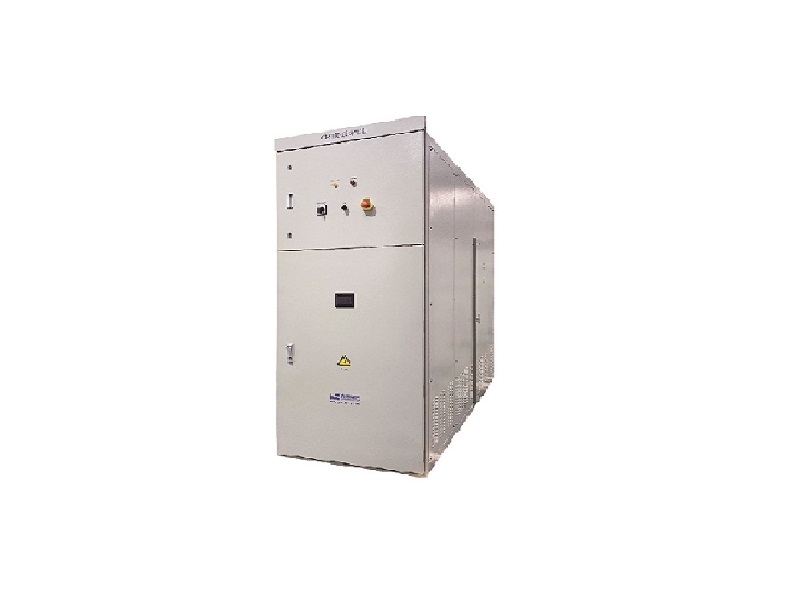
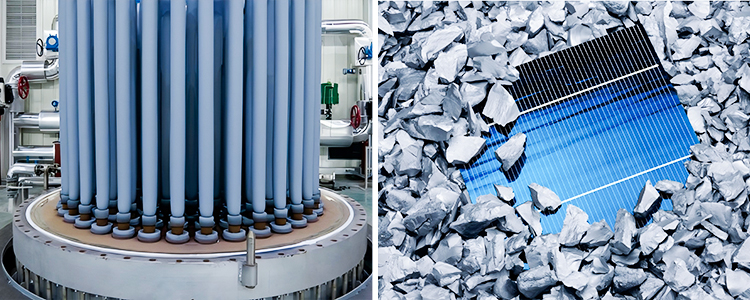
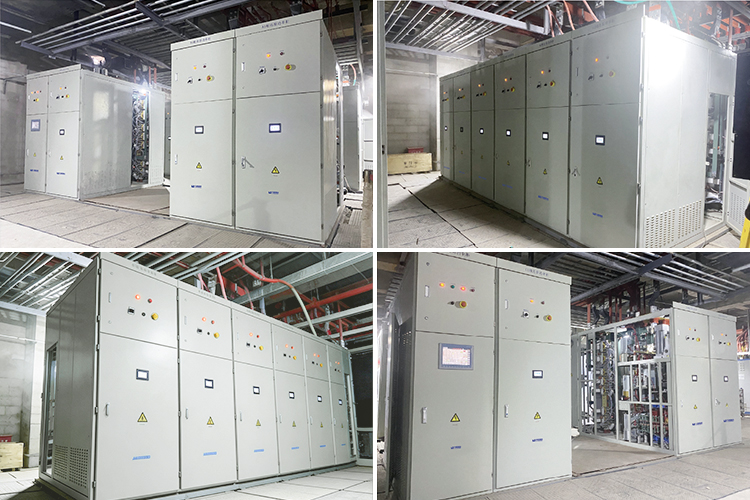
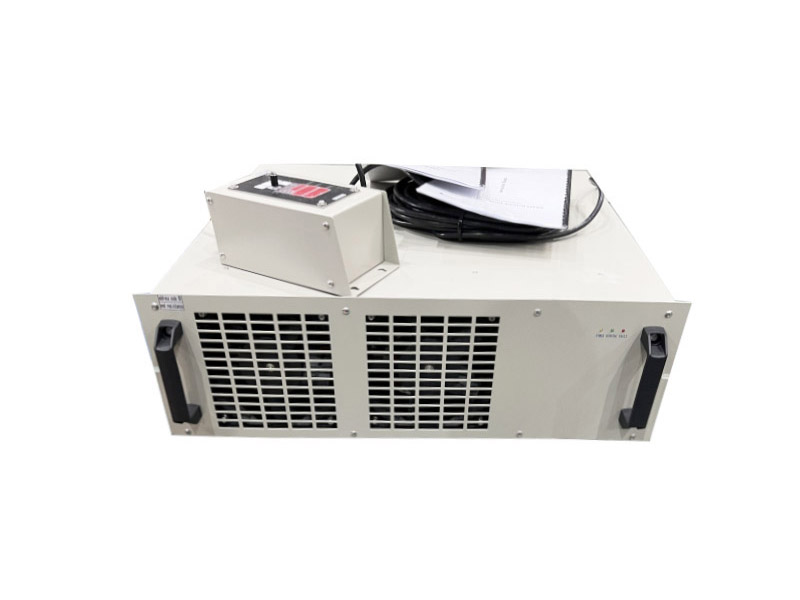
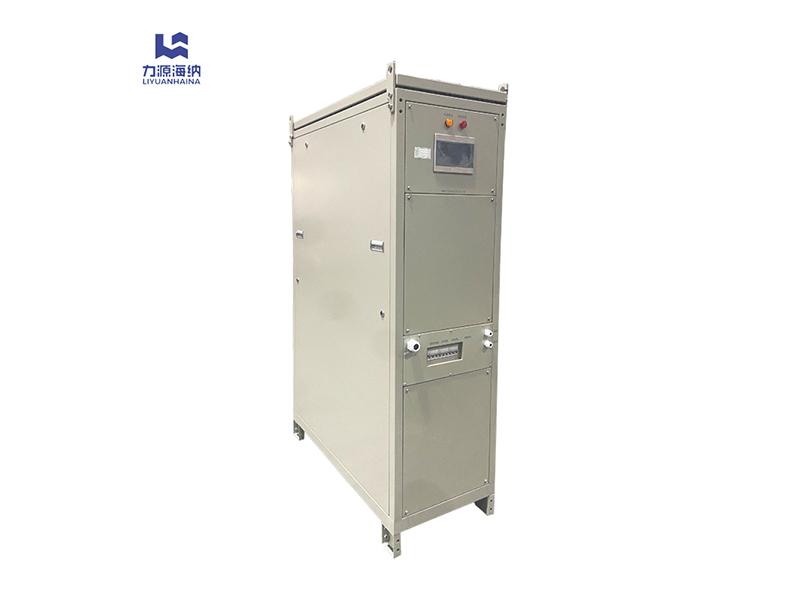
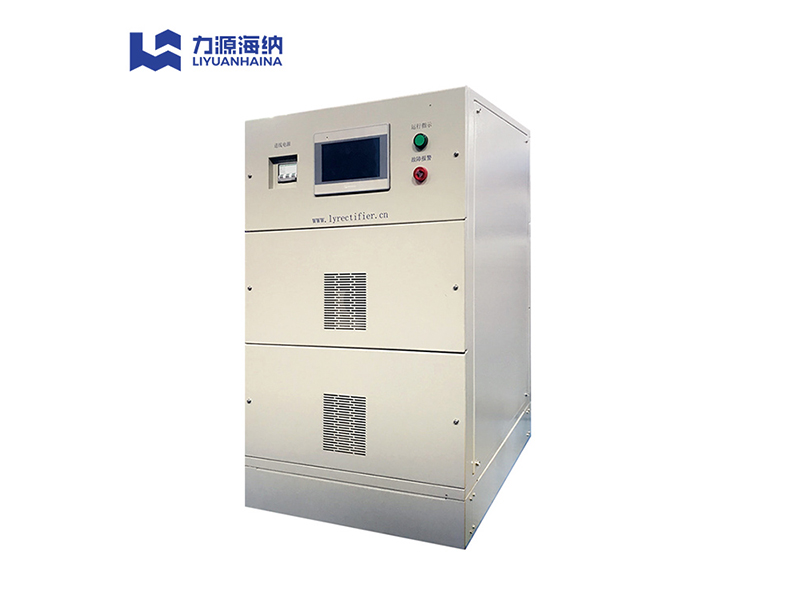
Polysilicon is the core base material for the photovoltaic industry and semiconductor manufacturing, with the modified Siemens process as the mainstream production method. In this process, the polysilicon reduction furnace rectifier serves as the critical equipment for high-power electrical energy conversion and control, responsible for providing fully adjustable power throughout the entire process—from silicon rod breakdown startup to silicon rod reduction growth. It directly determines the energy consumption level and product yield of the reduction stage.
Liyuan Haina focuses on this specialized field. Its polysilicon reduction furnace rectifier products feature high dynamic response, low harmonic output, and high reliability, capable of meeting the demanding requirements ranging from large-scale production of photovoltaic-grade polysilicon to the preparation of high-purity semiconductor-grade polysilicon. Based on similar electrothermal control principles, this series of polysilicon reduction furnace rectifiers can also be extended to applications such as monocrystalline silicon heating, sapphire crystal growth, and the preparation of gallium arsenide, indium phosphide, silicon carbide, aluminum nitride, and other third-generation/advanced semiconductor materials, providing fundamental power support for the wide-bandgap semiconductor industry chain.
Working Principle
The polysilicon reduction furnace rectifier is based on AC voltage regulation and high-frequency inverter technology, delivering controllable electrical power to the silicon rods inside the reduction furnace. Its operation is divided into two stages: startup and reduction. During the startup stage, the fast high-voltage striking system outputs an adjustable high voltage of 0–12kV to break down the silicon rods and make them conductive. During the reduction growth stage, the system switches to a low-voltage, high-current mode to maintain the temperature required for the reduction reaction on the silicon rod surfaces.
Applications
Polysilicon reduction furnace rectifiers are widely used in the following fields: › Photovoltaic industry: Large-scale production of solar-grade polysilicon, supporting 40T single-furnace high-capacity systems. › Semiconductor manufacturing: High-purity semiconductor-grade polysilicon preparation, requiring extremely high current regulation accuracy and reliability. › Other materials preparation: Monocrystalline silicon heating, sapphire heating, gallium arsenide, indium phosphide, silicon carbide, aluminum nitride, and other materials preparation.
Product Features and Technical Characteristics
› Integrated Striking & Deposition High-voltage breakdown and reduction reaction occur simultaneously, eliminating the cumbersome traditional process of breaking down first and then switching to reduction mode, which suffers from low production efficiency and long cycle times. The built-in high-voltage startup circuit enables one-click startup from the control room, reducing on-site operations.
› Fast High-Voltage Striking System · Supports adjustable voltage of 0–12kV for silicon rod breakdown, with multiple modes including one-to-one and one-to-many startup. The system maintains operation until all silicon rods in that phase are fully broken down and conductive. · Built-in high-voltage startup circuit enables one-click startup from the control room, reducing on-site operations. · Supports simultaneous startup of up to 9 phases per furnace, with fast startup speed that significantly shortens the startup time. · Each reduction rectifier system operates independently—furnaces are completely independent from one another and can perform striking startup simultaneously, greatly reducing production time.
› Innovative IGBT Mode In addition to the traditional silicon power regulator, Liyuan Haina has innovatively introduced the IGBT-mode polysilicon reduction furnace rectifier, which offers the following significant advantages over traditional silicon power regulators: · High power factor: Power factor can reach ≥0.95, eliminating the need for SVG power factor compensation devices required by traditional silicon power regulators. · Balanced three-phase operation: Resolves the three-phase imbalance issue of silicon power regulators. · Streamlined configuration: Simpler equipment configuration. · Higher efficiency: 2% higher efficiency than traditional silicon power regulators. · Faster control speed: IGBT switching frequency at 15kHz provides faster control response.
› Fast Current Limiting Technology Conventional solutions typically employ trip protection during overcurrent events. Liyuan Haina uses fast comparison detection and intelligent judgment methods—in most cases, fast current limiting is activated instead of tripping. For example, when short circuits occur between different rod pairs due to T-type resistance variations during polysilicon growth, causing current surges and overcurrent conditions, the equipment applies fast current limiting without tripping, avoiding production interruptions.
› Control and Precision · Advanced digital trigger control system: Control system core uses ARM + FPGA microprocessors, featuring digital control, strong anti-interference capability, stable operation, high control precision, and fast response speed. · High-stability fiber-optic signal transmission: Power drive system uses fiber-optic signal control, offering strong anti-interference, stability, and reliability. · High-performance PID adaptive control strategy: Adapts to different load types, with high control precision, excellent dynamic characteristics, and user-friendly parameter settings. · Current regulation accuracy: ≤±0.2%
› High-Efficiency Voltage Stacking Technology Multi-layer power stacking control technology enables each group of power circuits to receive multiple voltage levels, stacking the output power. This multi-layer voltage stacking control effectively improves reduction rectifier efficiency, reduces harmonics, and delivers significant energy savings.
› Structure and Reliability · Special axial-center symmetrical pressing process: Effectively avoids bending deformation, uneven contact surfaces, and voltage drops in water-cooled busbars caused by non-axial-center symmetrical pressing. · Integrated design: The entire unit features a one-piece water cooling circuit with no unnecessary internal joints, effectively preventing water leakage while maintaining excellent heat dissipation. · Reliable water cooling system: Industrial-grade anti-leak locking nozzles and imported flexible hoses effectively prevent delamination, cracking, seepage, and loosening issues caused by prolonged use. · Intelligent fault protection: When a thyristor in a particular tap position fails, that tap automatically disengages without affecting normal equipment operation, ensuring continued silicon rod growth.
› Protection Functions Comprehensive protection features include overcurrent, overtemperature, overvoltage, communication failure, short circuit, silicon rod breakage fault, silicon rod short circuit fault, silicon rod wall-contact protection, and thyristor parallel RC protection.
Patents for Photovoltaic Industry Applications
› An Integrated Polysilicon Reduction Furnace Power Supply System Patent No.: CN202221910709.1 › An Integrated Polysilicon Reduction Furnace Power Supply System and Its Operating Method Patent No.: CN202210858679.2
Technical Parameters
Parameter
Specification
Input Voltage
Three-phase AC 10kV ±10%, 50±1Hz
AC Output
Three-phase transformer with 9 independent secondary windings, each separately controlled
Striking Voltage
12kV (customizable)
Deposition Output Current
0–4600A (customizable)
Deposition Output Voltage
0–2800V (customizable)
Current Regulation Accuracy
≤±0.2%
Power Factor
SCR solution: ≥0.92 at max. current
SCR Transformer Taps per Phase
5 taps
SCR Control Topology
Each load group controlled by 5 parallel-connected thyristor groups for tap changing and voltage regulation, plus 2 parallel-connected thyristor groups for striking control
Protection Functions
Overvoltage, overcurrent, undervoltage, short circuit, overtemperature, and more
Cooling Method
Water-cooled
Communication Interface
RS485, CAN, Ethernet (optional)
Dimensions
Customizable upon request
*OK to Customized according to requirements*
Selection Guide
When selecting a polysilicon reduction furnace rectifier, the following factors should be taken into consideration: › Furnace scale and capacity: Determine the rectifier capacity based on the reduction furnace scale, supporting up to 40T single-furnace systems. › Startup mode: Confirm the striking startup mode requirements, supporting one-to-one and one-to-many startup. › Control method: Standard RS485 communication network capable of connecting multiple units. › Cooling method: Choose water-cooled or air-cooled solutions based on site conditions. › Brand and after-sales service: Select a supplier with proven large-scale application track record and comprehensive service capabilities.
Liyuan Haina is committed to providing high-efficiency, stable, and energy-saving reduction furnace rectifier solutions for polysilicon manufacturers, helping customers reduce production costs and improve product quality.
For polysilicon reduction furnace rectifier selection and configuration, please contact us. We will provide customized recommendations based on your specific furnace type and process requirements.
If you need a polysilicon reduction furnace power supply with different specifications, we can customize the design to meet your exact requirements. Please contact us for more details.
Looking for factory-direct pricing on a polysilicon reduction furnace power supply KGSGQ-4600A/2800V? Liyuan Haina Rectifier is a professional manufacturer and supplier in this field. With over 27 years of experience in R&D, design, production, sales, and technical services for industrial rectifiers, we have exported our products to the United States, Canada, the UK, Italy, Spain, South Africa, Russia, the UAE, Japan, South Korea, Malaysia, and many other countries. Our well-equipped factory enables us to offer high-quality, Made-in-China products at competitive prices, along with flexible customization services. We warmly welcome your inquiries.
Hot Tags: Polysilicon Reduction Furnace Power Supply KGSGQ-4600A/2800V, PV Power Supply, Polysilicon Reduction Reactor Power Supply, China